Full Moon: The art of luminous release
By Arden Blake | Updated January 2026
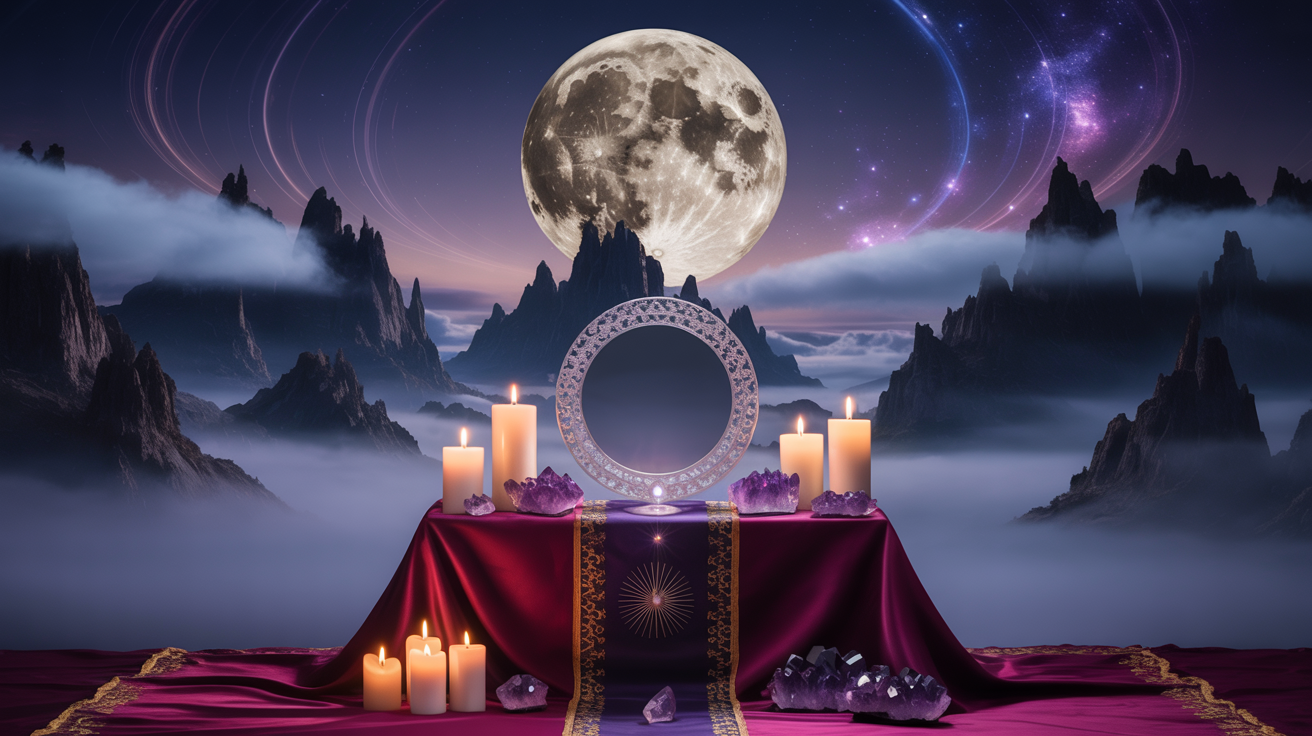
The full moon illuminates what is ready to be released
What is the full moon good for?
The full moon is for releasing what no longer serves you - not starting new things. This phase marks the peak of lunar illumination, 14-15 days after the new moon. Use this energy for gratitude, celebration of progress, letting go of limiting beliefs, and completing cycles. Research on expressive writing shows that the practice of identifying and releasing through writing produces measurable improvements in well-being (Pennebaker & Smyth, 2016).
The essence of full Moon work
- 1.Release, do not initiate: The full moon signals culmination, not beginning. Starting new projects here means working against the waning energy that follows. Save your new beginnings for the new moon.
- 2.Expressive writing works: Meta-analysis of 146 studies shows expressive writing produces consistent psychological benefits with effect sizes of g=.075-.47 depending on context (Pennebaker & Smyth, 2016). Full moon release rituals draw directly on this research-backed practice.
- 3.Celebrate before releasing: Gratitude precedes letting go. Acknowledge your progress since the new moon before identifying what needs to be shed. This creates psychological closure rather than avoidance.
- 4.Timing matters: Full moon energy peaks for approximately three days centered on the exact full moon. The 33-47% boost in aspirational behavior at temporal landmarks (Milkman et al., 2014) applies to release work as much as goal-setting.
- 5.Your moon sign shapes your release style: Water signs release through emotion. Fire signs through action. Earth signs through tangible ritual. Air signs through communication. Personalize your practice to your birth chart.
Understanding the full Moon phase
The moon hangs complete in the night sky. After fourteen or fifteen days of gradual brightening, the lunar cycle reaches its apex - 100% illumination, the earth positioned directly between sun and moon. This is the full moon.
But what does this astronomical moment mean for your manifestation practice? Everything - and not what most people think.
The full moon is not a time to begin. The waxing phase - that period of growing light from new moon to full - has ended. What follows is the waning phase: diminishing light, turning inward, releasing. Starting something new at the full moon means immediately rowing against the current.
This is the phase of culmination, illumination, and completion. What you planted at the new moon has had two weeks to grow. Now the full moon reveals what has taken root - and what is ready to be composted.
"The full moon does not ask what you want to create. It asks what you are ready to release."
The energy of culmination: Release, gratitude, celebration
Full moon energy carries three distinct qualities. Understanding each transforms your practice from generic ritual to genuine transformation.
Release: The core full Moon practice
Release is not rejection. It is not pushing away or denying. True release is acknowledgment followed by conscious letting go.
Research on expressive writing by Pennebaker and Smyth (2016) demonstrates why written release rituals work. Their meta-analysis of 146 studies found that the act of articulating and externalizing emotions through writing produces measurable psychological and even physiological benefits. The effect sizes range from g=.075 in general populations to d=0.47 in studies focusing on physical health outcomes.
The full moon release ritual is applied expressive writing. You name what needs releasing - the fear, the pattern, the belief, the relationship dynamic - not to wallow in it but to move it from the shadows of your psyche onto paper. Then you release the paper. Fire, water, earth - the method matters less than the psychological completion.
Gratitude: Completing the cycle with grace
Before releasing, celebrate. This is not spiritual bypassing - it is proper sequencing.
What has happened since the new moon? What small victories, unexpected gifts, moments of clarity? The full moon illuminates progress that might otherwise go unnoticed. Acknowledging this progress creates psychological closure on the waxing phase before entering the waning one.
Gratitude at the full moon is not about pretending everything is perfect. It is about honest accounting. "This worked. This did not. I am grateful for the lessons in both."
Celebration: Honoring the fullness
The full moon has been a time of gathering and celebration across cultures for millennia. This is not superstition - it is practicality. In times before electric light, the full moon provided illumination for evening activities.
Modern full moon celebration need not be elaborate. A special meal. A gathering with friends. A solitary walk under the bright night sky. The act of marking this moment as distinct from ordinary time creates the "temporal landmark" effect that research shows increases our engagement with meaningful action.
Your moon sign reveals your unique release style. Discover how your birth chart shapes your full moon practice:
Get Your Free Moon ReadingWhy the full Moon is not for starting new things
This point deserves emphasis because popular manifestation content often gets it wrong.
The new moon and full moon are opposites - not in a hostile sense, but in a complementary one. The new moon is the inbreath. The full moon is the outbreath. You cannot inhale and exhale simultaneously.
Starting a new intention at the full moon means beginning just as energy starts to wane. It is like planting seeds in autumn rather than spring. Nature will work against you rather than with you.
What each phase is for:
- New Moon: Plant intentions, begin projects, set goals, initiate
- Waxing Phase: Build momentum, take action, develop, grow
- Full Moon: Release, celebrate, express gratitude, let go
- Waning Phase: Rest, reflect, integrate, prepare
If you have a new intention burning to be expressed at the full moon, write it down and hold it. Let it deepen over the waning phase. Then plant it properly at the next new moon, when the energy naturally supports beginnings.
Best practices for full Moon work
Full moon practice does not require elaborate setup. What it requires is intentionality. Here are the principles that make this work meaningful:
Create space before the full Moon
The day or two before the full moon, begin reflecting. What has the last two weeks revealed? What patterns keep appearing? What do you find yourself resisting?
This preparatory reflection means you arrive at the full moon with clarity rather than trying to figure everything out in the moment.
Write before you release
Research on implementation intentions (Gollwitzer & Sheeran, 2006) shows that specificity dramatically increases follow-through. Their meta-analysis of 94 studies with over 8,000 participants found a medium-large effect size (d=0.65) when people articulate exactly what they intend to do.
Applied to release work: "I am releasing negativity" is vague. "I am releasing the belief that I am not smart enough to succeed" is specific. "I am releasing my pattern of overcommitting because I am afraid to say no" is even more specific. The more precisely you name what you are releasing, the more effectively you release it.
Complete the physical action
Writing alone is not sufficient for full moon release work. You must do something with what you have written. Burn it. Bury it. Tear it into pieces and scatter them to the wind. Submerge it in water.
This physical completion tells your nervous system that something has ended. It creates the closure your psyche needs to truly let go.
Do not force emotion
Some full moon releases will bring tears. Others will feel matter-of-fact. Neither is wrong. The goal is authentic release, not performed emotion.
If you find yourself dry-eyed during a release that you expected to be emotional, trust that. Your work is still valid. Forcing tears serves no one.
Full Moon rituals for release and celebration
These rituals balance meaning with practicality. Choose one that resonates, or adapt elements from several.
The written release ceremony (15-20 minutes)
What you need: Paper, pen, a fireproof container or outdoor space, matches
1. Center yourself (2 minutes)
Light a candle if you have one. Take three deep breaths. Feel your feet on the floor. You are here. You are present.
2. Acknowledge what has grown (3 minutes)
Write briefly about what has developed since the last new moon. Victories, surprises, lessons. This is your gratitude portion.
3. Name what you are releasing (5 minutes)
On a separate piece of paper, write what you are consciously choosing to let go of. Be specific. "I release the belief that I need to prove my worth through overwork." "I release my attachment to this relationship taking the form I imagined." Name it fully.
4. Release the physical paper (5 minutes)
Take your release paper outside or to a fireproof container. Light it carefully. Watch it burn. As the flames consume the paper, feel your nervous system registering completion. What was held is now released.
5. Close with intention (2 minutes)
Speak aloud: "I have released what no longer serves my growth. I am lighter. I am ready for what comes next." Blow out your candle. The ritual is complete.
The full Moon water ritual (10 minutes)
What you need: A bowl of water, paper, pen
1. Charge the water
Place your bowl of water where it can catch moonlight - on a windowsill or outside. Let it sit for at least an hour, or overnight.
2. Write your releases
On small pieces of paper (or with water-soluble ink), write what you are releasing. Keep it brief - a word or phrase per paper.
3. Submerge and dissolve
Place each paper in the moon water. Watch the water begin to absorb what you have written. You can speak each release aloud as you submerge it.
4. Return to the earth
Pour the water onto the earth - a garden, a houseplant, the ground outside. What you released now nourishes new growth.
The gratitude illumination practice (10 minutes)
For when release is not needed this cycle
Not every full moon requires heavy release work. Sometimes the cycle has been one of steady growth, and the full moon calls for simple celebration.
1. Find your moon
Go outside where you can see the full moon, even briefly. If clouds cover it, know it is there.
2. Speak your gratitude
Aloud or silently, name five things from the last two weeks you are grateful for. Let each one land before moving to the next.
3. Receive the light
Stand in the moonlight for a few breaths. Imagine it filling you with clarity about what comes next. No action required - just presence.
Your full Moon practice, personalized
How you release matters as much as what you release. Your moon sign reveals your natural release style.
Discover Your Moon Sign's Release StyleFull Moon release by Moon sign element
Your birth chart moon sign shapes how you naturally process and release emotions. Working with rather than against your elemental nature makes full moon practices more effective.
Fire Moons (Aries, Leo, Sagittarius)
You release through action and expression. Sitting quietly with a journal may feel stagnant. Instead:
- Dance out what you are releasing
- Speak your release aloud with passion
- Use the fire element literally - burn your paper with intention
- Take a vigorous walk under the full moon
Earth Moons (Taurus, Virgo, Capricorn)
You release through tangible, sensory practices. Abstract rituals may feel ungrounded. Instead:
- Bury your release paper in the earth
- Create something with your hands that represents release
- Take a moonlit walk in nature
- Prepare a special meal to mark the occasion
Air Moons (Gemini, Libra, Aquarius)
You release through communication and intellectual processing. Silent rituals may leave you unsatisfied. Instead:
- Write extensively before burning
- Speak your release aloud to the moon
- Share your full moon practice with a trusted friend
- Create a voice memo of what you are releasing
Water Moons (Cancer, Scorpio, Pisces)
You release through emotion and intuition. Structured rituals may feel rigid. Instead:
- Let tears come if they need to
- Use water in your ritual - baths, the ocean, moon water
- Follow your intuition rather than prescribed steps
- Journal from your emotional body, not your analytical mind
Full Moon questions answered
What should I do during a full moon for manifestation?
Focus on releasing and letting go, not starting new things. Practice gratitude for progress since the new moon. Write out what you are ready to release - limiting beliefs, old patterns, what no longer serves you. Use expressive writing techniques (shown to improve well-being in 146 studies) to articulate what you are releasing, then symbolically let go through burning, burying, or water dissolution.
Why is full moon energy different from new moon energy?
The full moon occurs 14-15 days after the new moon when lunar illumination reaches 100%. Astronomically, this is the point of maximum reflection. Energetically, it marks culmination rather than initiation. The new moon is for planting seeds; the full moon is for harvesting what has grown and composting what has not. Starting new projects during the full moon works against the natural waning energy that follows.
How long does full moon energy last?
Full moon energy is strongest for approximately three days - the day before, the day of, and the day after the exact full moon. Many practitioners work with the energy up to 3-5 days on either side, though the peak intensity occurs during that central window. If you miss the exact full moon, you can still do meaningful release work in the days following.
Can I set intentions during the full moon?
The full moon is not optimal for setting new intentions - that is new moon work. However, you can set release intentions: consciously choosing what patterns, beliefs, or habits you are ready to let go of. Think of full moon intention work as deciding what to compost, not what to plant. If a new intention arises, write it down and hold it for the next new moon.
What is a full moon release ritual?
A full moon release ritual involves three elements: identifying what no longer serves you, expressing it through writing (research shows expressive writing has measurable benefits), and symbolically releasing it through a physical action - burning, burying, or dissolving in water. The ritual creates psychological closure and makes space for new growth in the next lunar cycle.
Work with your natural release style
Your moon sign determines how you naturally process emotions and let go. Discover your personalized approach to full moon release rituals.
Get Your Free Moon ReadingSources
- Pennebaker, J. W., & Smyth, J. M. (2016). Opening Up by Writing It Down: How Expressive Writing Improves Health and Eases Emotional Pain (3rd ed.). Guilford Press. Related meta-analysis: Frattaroli (2006), 146 studies, overall effect size g=.075; Smyth (1998), 14 studies, d=0.47.DOI: 10.1177/1745691617707315
- Gollwitzer, P. M., & Sheeran, P. (2006). Implementation intentions and goal achievement: A meta-analysis of effects and processes. Advances in Experimental Social Psychology, 38, 69-119.DOI: 10.1016/S0065-2601(06)38002-1
- Dai, H., Milkman, K. L., & Riis, J. (2014). The fresh start effect: Temporal landmarks motivate aspirational behavior. Management Science, 60(10), 2563-2582.DOI: 10.1287/mnsc.2014.1901