What your birth Moon phase reveals about your manifestation style
What does my birth moon phase say about me?
Your birth moon phase reveals your natural approach to processing emotions, pursuing goals, and creating change. The moon phase when you were born shapes whether you thrive on initiating new projects, refining existing work, or releasing what no longer serves you. Understanding your birth moon phase helps you work with your natural rhythms rather than against them, which research shows improves outcomes by 21% compared to generic approaches (Li et al., 2024).
Key takeaways
- •Your birth moon phase is determined by where the moon was in its cycle when you were born, and it shapes your natural approach to goals and emotional processing.
- •The 8 birth moon phases each carry distinct themes: New Moon initiates, Waxing phases build, Full Moon illuminates, Waning phases release and refine.
- •Research shows personalized approaches outperform generic advice by 21% (Li et al., 2024). Knowing your birth phase helps you work with your natural patterns.
Most people know their sun sign. Many know their moon sign. But there is another layer that often gets overlooked: the phase of the moon when you were born.
Your birth moon phase is not the same as your moon sign. Your moon sign tells you which zodiac constellation the moon was passing through. Your birth moon phase tells you where the moon was in its monthly cycle of light and shadow.
Think of it this way: your moon sign describes the flavor of your emotional nature. Your birth moon phase describes the rhythm of how you process change. Both matter. Together, they paint a more complete picture.
Whether you are a skeptic or a believer, understanding your birth moon phase offers a useful framework for self-reflection. At minimum, it gives you language for patterns you may have already noticed in yourself.
How birth Moon phase differs from Moon sign
Let me explain what makes these two concepts distinct.
Your moon sign is determined by the zodiac constellation the moon occupied at your birth. If you were born when the moon was in Cancer, you have a Cancer moon, regardless of whether the moon was new, full, or somewhere in between.
Your birth moon phase is determined by the moon's position relative to the sun. A new moon occurs when the sun and moon occupy the same position in the sky. A full moon occurs when they are opposite each other. The 8 phases mark the transitions between these points.
Two people can share the same moon sign but have entirely different birth moon phases. A Cancer moon born during a new moon will approach life differently than a Cancer moon born during a full moon. Same emotional flavor, different processing rhythm.
This distinction matters because it adds nuance. Generic advice that treats all Cancer moons identically misses the differences between someone whose natural rhythm favors initiation versus someone who thrives in moments of visibility and completion.
Want to find your exact birth moon phase?
Get Your Free Moon ReadingIncludes your birth moon phase, moon sign, and personalized insights
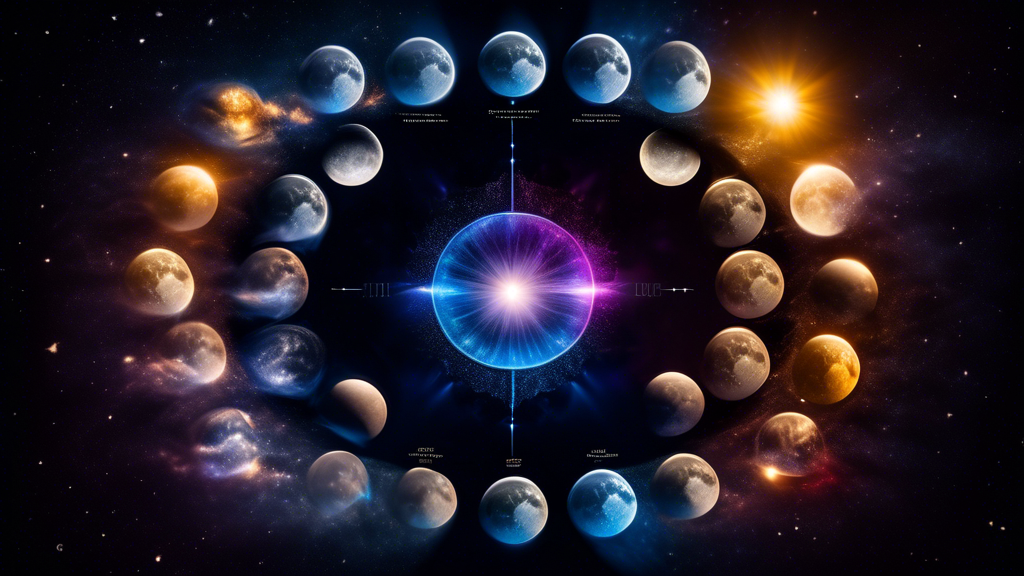
The 8 birth Moon phases explained
The lunar cycle divides into 8 phases, each spanning roughly 3.5 days. Here is what each phase suggests about your natural approach to goals, emotions, and change.
New Moon phase (0-3.5 days after new moon)
If you were born during a new moon, you likely have a natural capacity for starting fresh. New Moon phase people tend to be initiators. They often feel most alive at the beginning of projects, relationships, or chapters of life.
This does not mean you cannot finish things. It means your energy often peaks in that first spark of inspiration. You may find that your best ideas come suddenly and feel urgent, as if they need immediate attention.
What this means for your approach:
Trust your instincts when a new direction calls. Your strength lies in sensing possibilities that others miss. Consider pairing with people who excel at the follow-through phases to complement your initiating energy.
Waxing crescent phase (3.5-7 days after new moon)
Waxing Crescent phase people often have persistence as a core trait. If you were born in this phase, you may notice that obstacles do not discourage you the way they discourage others. In fact, challenges sometimes fuel your determination.
This phase sits just after the new moon, when the first sliver of light appears. Symbolically, it represents the moment when a new intention first encounters resistance from reality. People born here often carry that energy of pushing through initial friction.
What this means for your approach:
Do not quit when things get difficult. Your capacity to persist through early obstacles is one of your strengths. The struggle is part of your process, not a sign that something is wrong.
First quarter phase (7-10.5 days after new moon)
The First Quarter marks a crisis point in the lunar cycle, when the moon is half-illuminated and the tension between light and dark reaches a peak. People born in this phase often thrive under pressure.
If this is your birth phase, you may notice that deadlines sharpen your focus rather than paralyzing you. Make-or-break moments might actually bring out your best work. Comfort zones, on the other hand, may feel stifling.
What this means for your approach:
Create structure and deadlines, even artificial ones. Your process benefits from urgency. If everything feels too easy or too comfortable, you may find it harder to engage fully.
Waxing gibbous phase (10.5-14 days after new moon)
Waxing Gibbous is the phase of refinement. The moon is nearly full, almost complete, and the work at hand involves perfecting what already exists rather than creating something entirely new.
If you were born in this phase, you may have a natural eye for improvement. You might find yourself noticing what could be better, whether in your own work or in systems around you. Quality matters to you.
What this means for your approach:
Lean into your gift for refinement, but watch for perfectionism that delays completion. Your strength is making good things great. Sometimes 90 percent is good enough to move forward.
Full Moon phase (14-17.5 days after new moon)
Full Moon phase people often have a relationship with visibility. If you were born when the moon was full, you may find that your efforts gain traction when they are seen by others. Hiding your work might feel like hiding your light.
The full moon represents maximum illumination, the moment when the moon fully reflects the sun's light. Symbolically, this carries themes of awareness, completion, and relationship, since the sun and moon are in direct opposition.
What this means for your approach:
Share your goals and progress. Your process benefits from witnesses. This is not about ego; it is about how your natural rhythm works. Collaboration and public commitment may accelerate your results.
Waning gibbous phase (17.5-21 days after new moon)
Also called the Disseminating Moon, this phase follows the full moon and carries themes of sharing what has been learned. If you were born here, teaching, mentoring, or translating complex ideas for others may come naturally.
People with this birth phase often find that their own understanding deepens when they help others understand. The act of sharing becomes part of the learning process.
What this means for your approach:
Do not hoard what you know. Sharing knowledge opens doors for you. Whether through writing, teaching, or conversation, your process benefits from giving away what you have learned.
Last quarter phase (21-24.5 days after new moon)
The Last Quarter mirrors the First Quarter's half-illuminated moon, but the tension now points toward release rather than action. People born in this phase often have a natural capacity for breaking with convention.
If this is your birth phase, you may notice that traditional approaches do not always fit you. What works for everyone else might not work for you, and your breakthroughs might come through unconventional paths.
What this means for your approach:
Trust your instinct to question assumptions. Your strength lies in finding alternative routes. If a standard method is not working, give yourself permission to try something different.
Balsamic/waning crescent phase (24.5-28 days after new moon)
The Balsamic Moon is the final phase before the cycle renews. The moon is barely visible, a thin crescent fading into darkness. If you were born here, themes of release, surrender, and intuition may define your approach.
Balsamic phase people often find that forcing outcomes backfires. Your breakthroughs might come in moments of letting go rather than moments of effort. Dreams, meditation, and quiet reflection may be more productive for you than action plans.
What this means for your approach:
Practice surrender as a skill. Your results often arrive when you release attachment to how things should unfold. Trust that the quiet work matters, even when you cannot see its effects.
Curious which birth moon phase shapes your natural patterns?
Calculate Your Birth Moon PhaseWhy personalization matters
Here is where the research becomes relevant. A 2024 meta-analysis by Li and colleagues found that personalized approaches to behavior change outperform standardized interventions by approximately 21% (effect size d=0.21). The study examined how tailored motivational messages performed compared to generic advice.
This finding aligns with what astrology has suggested for centuries: one-size-fits-all guidance misses important individual differences. Whether you frame those differences through birth moon phases, personality types, or learning styles, the principle holds. Approaches that match your natural patterns tend to work better than approaches that ignore them.
Understanding your birth moon phase is one way to add that personalization layer. It is not the only way, but it offers a framework that has helped people recognize patterns in themselves for thousands of years.
Working with your birth Moon phase
Once you know your birth moon phase, there are several practical applications.
1. track when current Moon matches your birth phase
Each month, the current moon will pass through your birth phase. Some people find these days feel particularly aligned for focused work or decision-making. Whether this is astronomical influence or simply the power of intentional attention, tracking these days offers a natural rhythm for reflection.
2. notice your energy patterns
Pay attention to whether your birth phase description matches how you actually experience goal-setting and emotional processing. If it resonates, use it as a lens. If it does not, that is useful information too. No framework captures everyone perfectly.
3. adjust your approach accordingly
If you are a New Moon phase person using methods designed for Full Moon energy, you may be swimming against your own current. Consider whether the techniques you use honor or conflict with your natural rhythm. Small adjustments can reduce friction.
Combining birth Moon phase with Moon sign
Your birth moon phase and moon sign work together. The moon sign describes the emotional qualities you carry. The birth moon phase describes the rhythm of how you express those qualities.
For example, a Scorpio moon (intense, transformative emotional nature) born during a Balsamic phase (surrender-oriented rhythm) would process intensity differently than a Scorpio moon born during a First Quarter phase (action-under-pressure rhythm). Same emotional depth, different approach to working with it.
Adding current moon phases to this mix creates another layer. When the monthly moon phase matches both your birth phase and transits a compatible sign, some people report a sense of heightened clarity or effectiveness. Whether this represents cosmic influence or simply focused attention, it offers a framework for timing that many find useful.
A note for skeptics
If you approach astrology with skepticism, that is reasonable. The mechanism by which moon phases might influence personality remains unproven by conventional science.
That said, frameworks do not need to be literally true to be useful. Birth moon phases offer a vocabulary for discussing individual differences in how people approach change. Whether you believe the moon caused those differences or simply provides convenient categories, the self-reflection process itself has value.
Consider it a thought experiment. Read your birth moon phase description. Notice what resonates and what does not. Use whatever feels useful. Leave the rest.
Discover your complete lunar blueprint
Your free moon reading includes your birth moon phase, moon sign, and personalized guidance based on current lunar cycles.
Get Your Free Moon ReadingFinding your birth Moon phase
To determine your birth moon phase, you need your exact birth date and ideally your birth time. The moon changes phase approximately every 3.5 days, so being off by a day or two can place you in a different phase.
Online calculators can generate this information quickly. Look for tools that show the moon phase for any historical date. Enter your birth date and note which of the 8 phases corresponds.
If you were born near a phase transition, read both phase descriptions. You may resonate with qualities from each, which makes sense given that phase boundaries are fluid rather than sharp.
Sources
Li, H., Bai, K., Copara, M., Schwartz, H., & Daume III, H. (2024). Enhancing Behavior Change Support Through Personalization: A Study of Tailored Motivational Messages. Journal of Behavioral Data Science. https://doi.org/10.1145/3613904.3642877
Related reading: Explore our Moon Phases guide to understand how current lunar cycles interact with your birth phase, or learn more about finding your moon sign for a complete picture of your lunar personality.
Continue Your Moon Wisdom Journey
5 Signs You're Manifesting During the Wrong Moon Phase
Learn to identify timing mistakes that block your manifestations
Moon WisdomThe Emotional Moon Sign Guide
How all 12 moon signs manifest differently and how to use your emotional blueprint
Moon WisdomWaxing Crescent: Time to Take Action
Your 3-day window to activate new moon intentions
Moon WisdomWhy This New Moon Hits Different
The unique astrological factors making tonight extra powerful