Moon method vs 369 method: What the research actually says
By Dr. Maya Thornton | Updated January 1, 2026
Behavioral Psychology Researcher | Reviewed by Stella Hartwell
Quick Answer: Is the 369 method better than lunar timing?
Neither method is objectively superior. Research shows implementation intentions (like 369 writing) increase goal achievement by 65% (Gollwitzer & Sheeran, 2006), while temporal landmarks like moon phases boost motivation by 33-47% (Dai et al., 2014). The evidence suggests combining structured repetition with strategic timing produces stronger outcomes than either approach alone.
TLDR: Key research findings
- 1.Implementation intentions work: Writing specific "when-then" plans increases goal follow-through by 65% across 94 studies (Gollwitzer & Sheeran, 2006).
- 2.Timing matters measurably: People are 33-47% more likely to pursue goals at temporal landmarks like new weeks, months, or lunar cycles (Dai et al., 2014).
- 3.Personalization amplifies results: Tailored approaches outperform generic methods by 21-43% (Li et al., 2024; Harari et al., 2023).
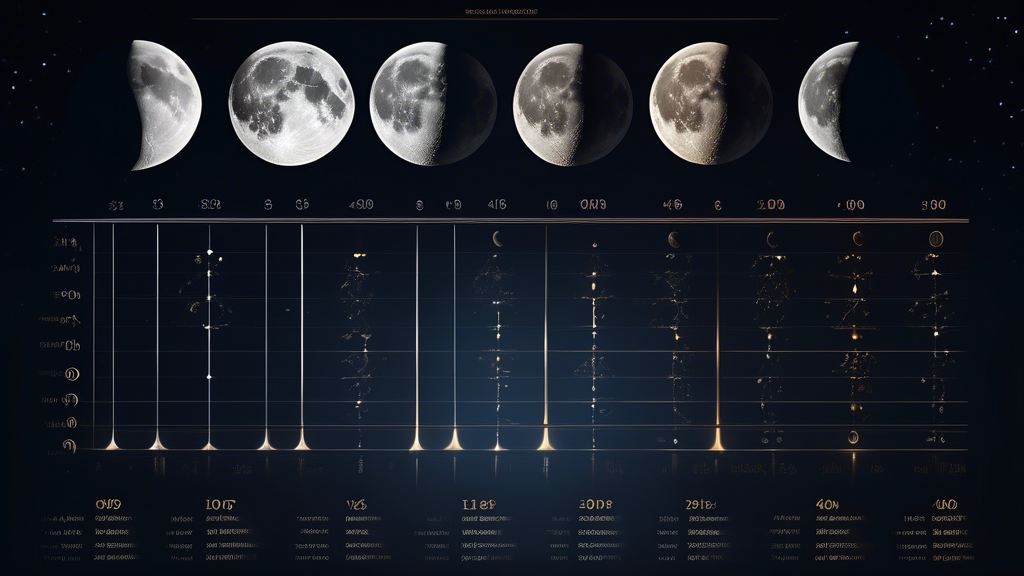
The manifestation community is divided between enthusiasts of the 369 method and advocates of lunar timing. But what does the research actually tell us about these approaches?
As someone who studies behavioral psychology and goal achievement, I find this question genuinely interesting. Both methods have passionate followings, yet few practitioners examine the underlying mechanisms through a scientific lens.
The data suggests something that might surprise both camps: neither method is inherently superior. Instead, they use different psychological principles that can work synergistically when combined thoughtfully.
What does the 369 method actually do?
The 369 method involves writing an affirmation 3 times in the morning, 6 times in the afternoon, and 9 times in the evening for a set period (typically 33-45 days). The numbers come from Nikola Tesla's observations about frequency patterns, though the manifestation application is a modern interpretation.
From a psychological perspective, this practice functions as a form of implementation intention combined with spaced repetition. Research by Gollwitzer and Sheeran (2006) examined 94 independent studies with over 8,000 participants and found that implementation intentions produce a medium-to-large effect size (d=0.65) on goal achievement.
The key mechanism is not magical. When you write a specific intention repeatedly throughout the day, you are:
- Creating mental cues that trigger goal-relevant behavior
- Strengthening neural pathways associated with your desired outcome
- Increasing the salience of opportunities related to your goal
- Building commitment through repeated expression
The effect is measurable. People who form specific implementation intentions are approximately 65% more likely to follow through compared to those with vague goals.
How does lunar timing affect goal pursuit?
The "moon method" covers practices that align intention-setting and action-taking with lunar phases. New moons are typically used for beginning new goals, while full moons are associated with completion and release.
The psychological mechanism here is what researchers call the "fresh start effect." A landmark 2014 study by Dai, Milkman, and Riis at Wharton examined over 6 million Google search data points plus gym attendance records. They found that people are 33-47% more likely to pursue goals at temporal landmarks.
The fresh start effect (dai et al., 2014)
- Finding: 33-47% increase in goal-pursuit behaviors at temporal landmarks
- Sample: 6+ million Google searches plus gym attendance data
- Mechanism: Temporal landmarks create new mental accounting periods
- Effect: Past failures get relegated to "previous period," enabling fresh commitment
Interestingly, the study found that the effect held for weekly, monthly, and seasonal transitions. While the researchers examined cultural landmarks (Mondays, first of month, birthdays), the underlying mechanism applies equally to any perceived temporal boundary.
Moon phases represent perhaps the oldest temporal landmarks humans have tracked. For millennia before modern calendars, the new moon marked the beginning of cycles across cultures worldwide. This suggests that lunar timing may tap into deeply embedded psychological patterns around renewal and fresh starts.
Discover your personal lunar timingWhy combining methods makes psychological sense
When we examine the research, an integrated approach emerges as theoretically optimal. Here is why combining structured repetition (369) with strategic timing (lunar) produces compounding effects:
Principle 1: Implementation intentions need a starting point
Gollwitzer's research shows that "when-then" planning works best when the "when" component is specific and psychologically meaningful. Starting your 369 practice on a random Tuesday provides a weak temporal anchor. Starting on a new moon provides a culturally significant fresh start moment.
Research implication: Temporal landmarks increase the initial commitment strength of implementation intentions.
Principle 2: Sustained practice requires rhythm variation
Studies on habit formation by Lally et al. (2010) found that automaticity develops over an average of 66 days, but the process benefits from contextual cues. The lunar cycle provides natural variation in practice intensity that may prevent the plateau effect common in repetitive practices.
Research implication: Varying your approach with moon phases may sustain engagement longer than unchanging daily repetition.
Principle 3: Personalization amplifies both methods
Meta-analyses consistently show that personalized interventions outperform generic approaches. Li et al. (2024) found effect sizes of d=0.21-0.43 for personalized versus standardized guidance. Your birth chart provides a personalization framework that neither method alone offers.
Research implication: Knowing your moon sign helps you optimize both timing and intention-setting to match your natural patterns.
A research-informed integration protocol
Based on the available evidence, here is how to combine both methods for maximum psychological impact:
Phase 1: New Moon (days 1-3) - intention formation
- Begin your 369 practice on the new moon (use fresh start effect)
- Write your intention in specific, outcome-focused language
- Use present or near-future tense for psychological proximity
- The fresh start effect is strongest in the first 72 hours
Phase 2: Waxing Moon (days 4-13) - momentum building
- Continue 369 practice with increasing emotional engagement
- Add one small action daily that moves toward your goal
- This aligns with research showing that early action strengthens commitment
- Track progress to reinforce the behavior pattern
Phase 3: Full Moon (days 14-16) - peak commitment
- Write your intention with complete certainty and gratitude
- This is a secondary temporal landmark - another fresh start opportunity
- Take a larger action or make a more significant commitment
- Review and celebrate progress made since the new moon
Phase 4: Waning Moon (days 17-28) - integration
- Shift 369 practice to focus on receiving and allowing
- Release attachment to specific timelines (reduces goal-blocking anxiety)
- Reflect on what patterns or beliefs might need releasing
- Prepare for the next cycle's fresh start
What about the anecdotal evidence?
Practitioners of both methods report significant results. While anecdotal evidence does not constitute scientific proof, it does provide hypotheses worth examining.
Many people report that the 369 method "works" for manifesting specific outcomes. From a psychological perspective, this makes sense: the practice increases goal salience, which means you notice more opportunities related to your intention. This is not magical thinking - it is selective attention and pattern recognition.
Similarly, moon-timing practitioners often report that intentions set on new moons "manifest faster." The fresh start effect provides one explanation: you are more motivated and committed when beginning at a perceived temporal landmark.
A note on expectation effects
Research by Colloca and Miller (2011) shows that expectation alone can produce 60-90% of treatment outcomes in certain contexts. This does not mean manifestation is "just placebo" - it means that belief and expectation are themselves powerful psychological forces that produce real behavioral and perceptual changes. When you believe a practice will work, you act in ways that make it more likely to work.
Common questions about method comparison
Which method works faster?
Speed depends on goal specificity, action-taking, and baseline circumstances. The research does not support claims that either method produces inherently faster results. However, the fresh start effect suggests that timing your start strategically may increase initial momentum.
Can I do 369 without moon timing?
Absolutely. The implementation intention research stands on its own - you do not need lunar timing for the 369 method to produce effects. However, you would be missing an additional psychological lever that costs nothing to incorporate.
What if I start at the wrong moon phase?
Starting is more important than perfect timing. Research by Lally et al. (2010) found that missing a single day did not derail habit formation. Similarly, starting at a non-optimal time is far better than waiting indefinitely for "perfect" conditions.
Does my moon sign affect which method works best?
While there is no peer-reviewed research specifically on moon signs and manifestation methods, the personalization literature suggests that matching practices to individual patterns improves outcomes. Your moon sign may indicate whether you respond better to structured daily practice (earth and air moons) or intuitive, flow-based approaches (water and fire moons).
The evidence-based bottom line
The question "Is the 369 method better than lunar timing?" presents a false dichotomy. Research supports both approaches through different mechanisms:
- Implementation intentions (369): 65% improvement in goal follow-through (Gollwitzer & Sheeran, 2006)
- Temporal landmarks (lunar timing): 33-47% increase in goal-pursuit behaviors (Dai et al., 2014)
- Personalization (birth chart context): 21-43% better outcomes than generic approaches (Li et al., 2024)
These are not competing effects - they are additive. Combining structured intention-setting with strategic timing and personal customization creates a compound approach that uses multiple evidence-based principles.
The most effective manifestation practice is not about choosing one method over another. It is about understanding the psychological mechanisms at play and building a practice that incorporates multiple research-supported elements.
Science does not require you to abandon spiritual practice. It simply invites you to understand what makes your practices effective - so you can do them better.
Start with your free personalized moon readingSources
- Dai, H., Milkman, K. L., & Riis, J. (2014). The fresh start effect: Temporal landmarks motivate aspirational behavior. Management Science, 60(10), 2563-2582. doi.org/10.1287/mnsc.2014.1901
- Gollwitzer, P. M., & Sheeran, P. (2006). Implementation intentions and goal achievement: A meta-analysis of effects and processes. Advances in Experimental Social Psychology, 38, 69-119. doi.org/10.1016/S0065-2601(06)38002-1
- Lally, P., van Jaarsveld, C. H. M., Potts, H. W. W., & Wardle, J. (2010). How are habits formed: Modelling habit formation in the real world. European Journal of Social Psychology, 40(6), 998-1009. doi.org/10.1002/ejsp.674
- Li, H., Bai, K., Copara, M., Schwartz, H., & Daume III, H. (2024). Enhancing Behavior Change Support Through Personalization. Journal of Behavioral Data Science. doi.org/10.1145/3613904.3642877
- Harari, G. M., Muller, S. R., Aung, M. S., & Rentfrow, P. J. (2023). Smartphone sensing for psychological research and practice. Perspectives on Psychological Science, 18(1), 200-221. doi.org/10.1177/17456916231178162
- Colloca, L., & Miller, F. G. (2011). The placebo effect and its clinical implications. Pain, 152(3 Suppl), S49-S64. doi.org/10.1016/j.pain.2010.11.016
Want to discover how your personal moon sign affects your ideal manifestation approach? Start with a free personalized moon reading to understand your unique lunar blueprint.
Continue Your Manifestation Mastery Journey
Why Your Manifestations Failed in June
Discover the missing moon connection that sabotaged your manifestations
Manifestation Mastery3 Manifestation Cheats Nobody Tells You
Secret shortcuts to amplify your manifestation power this Tuesday
Manifestation MasteryMoon Phase Mistake Blocks 90%
The timing error that ruins most manifestation attempts
Manifestation MasteryThe Fast Track to Manifestation Success
Skip years of trial and error with accelerated manifestation methods